ERP for Retail and Ecommerce Industry

We are independent ERP consultants specializing in ERP for retail and ecommerce industry, from software selection through to implementation. We do not accept compensation from any vendor or implementer, so our advice is entirely in your interest.

Compare Retail & Ecommerce ERP Software

Compare Retail & Ecommerce ERP software by scrolling down and across to see their applications/modules, number of customers, underlying technology and critical generic requirements.

Click to filter by Tier, System, Application, Industry, Criteria Category and Criteria Detail.
Tier
System
Compare Criteria
Product Information
System
Vendor
Description
Website
Primary Tier
Industries
Applications
Developer Information
Number of customers - all products
Number of customers - this product
Technology
% of application that is web based (just need a browser on workstation)
On premise, cloud or hybrid
Private or Public Cloud
Tenant Architecture
Generic Requirements
Customization/Configuration
Without changing source code
User-defined fields
  • Can define values/dropdowns for fields
  • Used in report selection and ordering
  • Used in workflow
User defined screens
  • Change fields to required, optional or invisible for standard and user-defined field
Multiple Companies
Share inventory across companies
Share customers and suppliers across companies
Automate balancing of transactions across legal entities
PO of 1 company automatically generates the sales order in another company
Multiple Currencies
Maintain source and home currency amount for each transaction
Date effective currency exchange rates
Work Flow
Can apply an approval process to any transaction such as a journal entry or any master file such as a supplier or inventory item
Can generate alerts/escalation if something expected is late or reminders
Configurable approvals or alerts without needing programming
Mobility
Optimized for Android and iPhone
Offline mode and synch when internet connected
Sales tax compliance
Canadian sales tax compliance
US sales tax compliance
Reporting/Business Intelligence
Reporting
Industry standard reporting tool and can change existing reports or add new ones
Ad-hoc reporting (don’t need a programmer) with filtering, sorting and summarizing options
Dashboards
Based on real time updates from all transactions
Role specific
Configurable dashboards - don't need to be a programmer to create or change dashboard
Analytics
Drag and drop dimensions
Visualization/graphic representation of data

Not all ERP systems are created equal. There is a big variance in functionality for a specific industry and for the size of company. Small companies don’t need the complexity required for larger companies. There is also a big difference in the ERP vendors which can be:

  • Vendors with solutions for multiple industries. These systems are more complicated to setup because of all the industries they support.
  • Vendors that offer a solution for a specific industry.
  • Vendors that offer an extension developed by a 3rd party for a specific industry.

This page covers unique ERP requirements for retail and ecommerce industry, an retail and ecommerce ERP system comparison across leading systems, and the ERP implementers that specialize in this space. If you would like independent guidance on which direction is right for your company, we would be glad to help.
Retail & Ecommerce ERP Software Systems Comparision

ERP Requirements for Retail Industry

Retail and ecommerce companies operate with requirements that generic ERP systems rarely support out of the box. The list below reflects what a purpose-fit system needs to handle:
Retail & Ecommerce ERP Software Systems Comparision

– Multiple payment types including cash, credit and debit cards, foreign currency, gift cards with split payments
– Flexible pricing including automatic discounts and promotions
– Mobile device to handle any inventory process such as counts or stock changes
– Workforce management including commissions
– Multiple dimensions for an item such as colour or size
– Loyalty programs
– Integrated e-commerce
– Omni channel shopping
– Sales and inventory forecasting based on trends but excluding one-time promotions
– Refund management
– Requisitions – manual and automatic based on replenishment system
– Inter store transfers
– Rebate management
– Directed put away
– Vendor managed inventory
– Warehouse management


ERP Implementers for Retail and Ecommerce Industry

Drill down for information about implementers of Retail & Ecommerce ERP Software including number of employees, systems supported and industries supported.
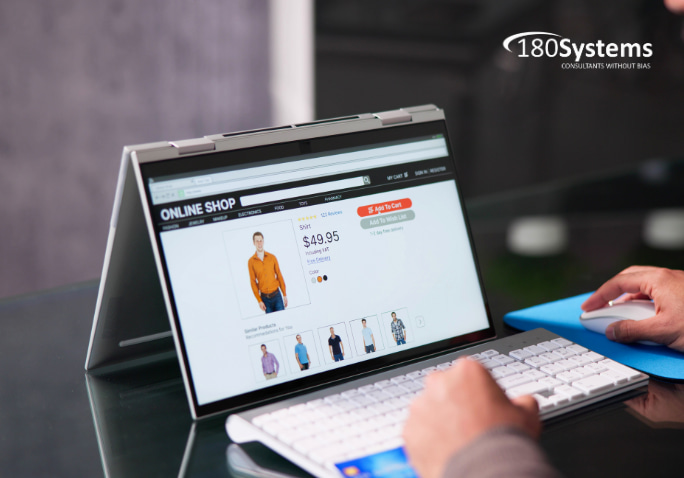
180 Systems conduct dozens of ERP selections every year. With our deep knowledge of ERP for retail industry, we will help you find the right ERP system for your company and the right professional services company to implement it.
Retail & Ecommerce ERP Software Systems Comparision

Why Companies Choose 180 Systems as Their ERP Consultant for Retail Industry

180 Systems Differentiators

1. Independence

We are independent ERP consultants and do not accept any compensation from vendors or implementers.

2. Requirements Analysis

Our analysis is mostly based on business process reviews rather than generic requirements checklists.

3. Strategic alignment

We identify requirements to attain critical success factors (CSFs) and use KPI’s to measure attainment of CSF’s as objectives for an ERP implementation.

4. Retail & Ecommerce ERP Experience

We have extensive experience in Retail & Ecommerce ERP software selection and implementation with testimonials below.

5. Methodology

We have a documented best practice methodology with numerous proven templates to manage ERP selections and implementations.

6. Efficient

We don’t waste anyone’s time. For example, ERP vendors are asked to only respond to critical requirements in an RFP with the goal of 20% of requirements deemed critical.

7. Cost

Our fees are low because we have little overhead, and don’t exceed a maximum unless there is a change in scope and it has been approved.

8. Trusted Advisors

Our clients know that we will always act with integrity and honesty.

Testimonial

From clients we’ve helped with Retail & ECommerce ERP Software Selection and/or Implementation

I was happy to have the help, and they were very affordable compared to many of the alternatives in the US, and their background in accounting also comes in handy. They have a smart process, with a comprehensive list of all the different features we need based on business process reviews, and then asking ERP vendors to respond to an RFP. Some did better than others in the rating process, and ultimately it was pretty easy to narrow it down right away using their technique. Basically, it took three months to get it all done. The standout thing - their experience is what really shines, and they were unbiased through the process.

Resources for ERP Selection and Implementation in Retail and Ecommerce
180-Systems_ERP-Software-Implementers-Selection-Tool

ERP Software & Implementers Selection Tool

You can filter ERP software by application, tier, and industry...
180-Systems_System-Selection-Methodology

System Selection Methodology

This is a ERP software selection process that you are probably dreading ...
180-Systems-_-ERP-Software-Implementers-Selection-Tool

ERP Total Cost of Ownership

When considering the total ERP software cost, it’s not just license fees and...

Frequently Asked Questions: ERP in Retail and Ecommerce Industry

What is retail ERP and why does the industry need a specialized system?

ERP in retail is an enterprise resource planning system configured to manage the specific operational and financial requirements of retail and ecommerce businesses. Unlike generic ERP systems, a purpose-fit retail ERP handles omni channel shopping, integrated ecommerce, point of sale, loyalty programs, multi-dimensional inventory management, sales and inventory forecasting, and warehouse management in a single platform. Without these capabilities, retail and ecommerce companies typically operate on disconnected systems that make it difficult to manage inventory accurately across channels and maintain a consistent customer experience.

What are the key ERP requirements for retail and ecommerce companies?

The most critical requirements for ERP in the retail industry include multiple payment types, flexible pricing with automatic discounts and promotions, mobile inventory management, workforce management with commissions, loyalty programs, integrated ecommerce, omni channel shopping, sales and inventory forecasting, refund management, inter-store transfers, and warehouse management. Requirements vary significantly depending on whether your business operates physical stores, online channels, or both, so a thorough requirements analysis should always come before any vendor evaluation.

How do I choose between a retail-specific ERP and a general ecommerce ERP system?

Retail-specific systems typically handle point of sale, omni channel operations, and inventory management better out of the box. General ecommerce ERP systems offer broader functionality but may require significant configuration to support retail-specific workflows such as loyalty programs, inter-store transfers, and promotional pricing. Independent ERP consultants can help you evaluate both options objectively, run a structured RFP process, and negotiate your contract without any vendor bias. As one of our retail clients noted, the process took three months from start to finish and the independent approach made it straightforward to narrow down the right system.

How much does ERP for retail and ecommerce cost?

ERP costs in the retail industry vary depending on the number of store locations, ecommerce channels, users, and the complexity of omni channel integration requirements. Businesses with both physical and online channels typically face higher implementation costs due to the complexity of connecting point of sale, inventory, and ecommerce systems. For a realistic breakdown of what to budget for, read our article on ERP Total Cost of Ownership.

Why should retail and ecommerce companies use independent ERP consultants rather than going directly to a vendor?

ERP vendors and their implementation partners are motivated to sell their own solution. Independent ERP consultants like 180 Systems do not accept compensation from any vendor or implementer, so the recommendation you receive is based entirely on your business requirements. This matters especially in retail and ecommerce, where vendors often oversell omni channel and integration capabilities that require significant customization to work correctly for your specific channel mix and operational model.

Help is just a click away

Contact us for independent advice on whether and how to replace or optimize your ERP software for retail and ecommerce industry.